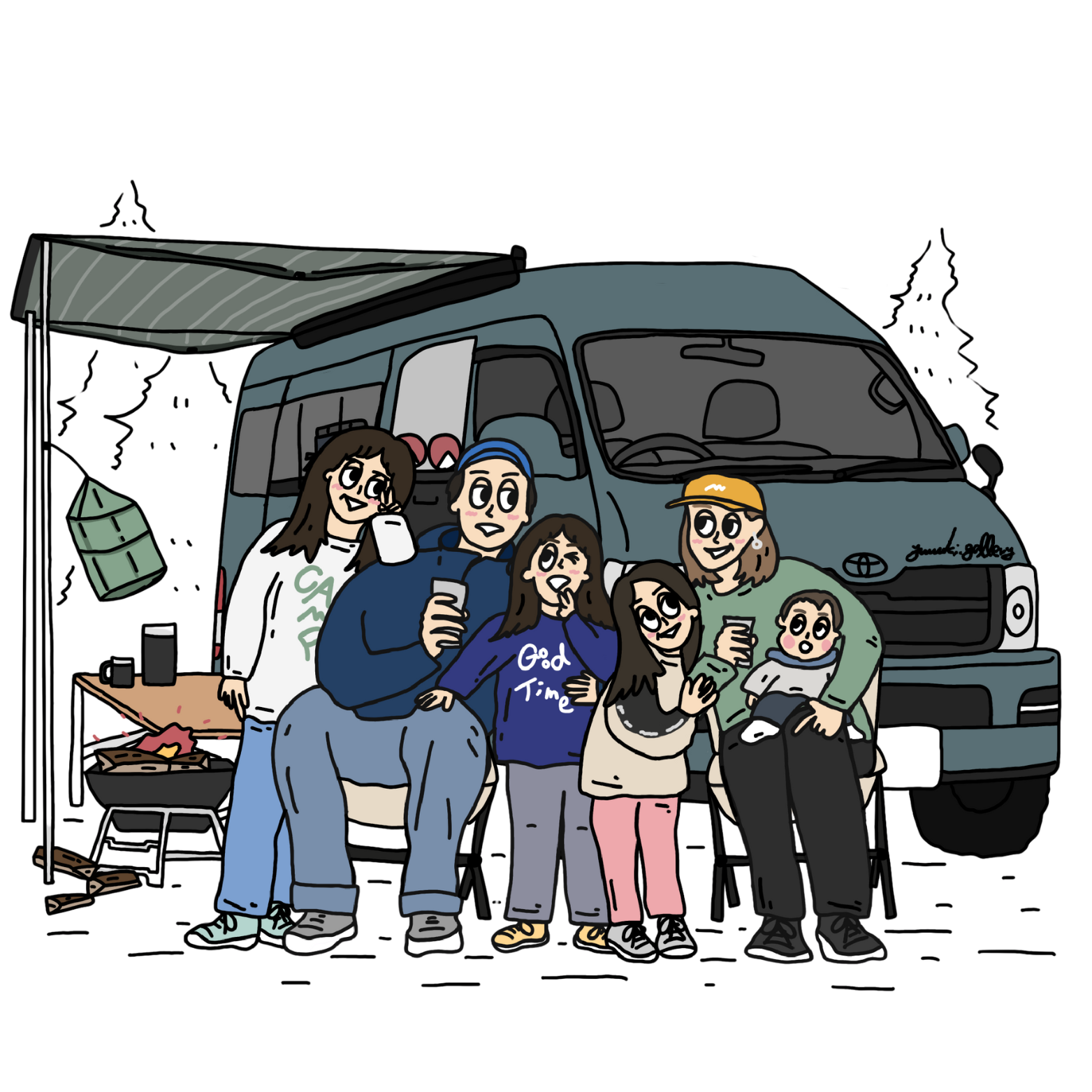
If you pull up to a famous Sanuki udon shop and the line runs across the parking lot, you have a choice: wait an hour with kids in the car, or drive on and eat somewhere just as good.
We drove on. This is what we found at Kagawaya Honten, the shop attached to a working noodle factory, and why we’d go back before we’d wait in that line again.
Why we didn’t wait at the famous shop
We had planned to eat at Yamagoe, a well-known udon shop in the hills. The line stretched across the parking lot before we’d even found a place to stop. With four kids in the van, an hour-long wait for lunch wasn’t worth it. We kept driving.
Kagawa has more udon shops per capita than almost anywhere in Japan, and the good ones get found fast. Locals know this too. Queues at the well-known shops often start forming before opening and stay heavy through the lunch rush. That’s not a knock on those shops. It’s just the math of a small dining room and a famous name.
What makes Kagawaya Honten different
Kagawaya Honten sits along a quiet road near the coast. It’s the shop attached to Sanuki Shokuhin, a noodle factory that’s been operating since before the shop opened in 2002. The udon is hand-cut, not machine-pressed, which is the same method the famous shops use. There was no queue when we arrived.
Sanuki udon is defined by texture more than anything else. The dough gets kneaded and rolled repeatedly, which is what gives it the firm, chewy bite the region is known for. That process is the same whether the shop has a line out the door or not, and it showed in the noodles here.
What the dashi tastes like, and why it’s worth mentioning
The dashi at Kagawaya Honten uses whole niboshi rather than the more common katsuobushi-heavy broths. It tastes mild and round, without the sharp fish-forward edge some niboshi dashi has. It’s a quieter version of the flavor, which suited the kids better than a stronger broth would have.
What we ordered and what it cost
We ordered niku bukkake, the beef-topped version of the cold-broth-poured-over-noodles style that’s common across Sanuki udon shops. Self-service is standard here: you order at the counter, carry your own tray, and add toppings yourself if you want them. It’s the same system used across most Sanuki udon shops in Kagawa, so if you’ve eaten at one before, you already know the drill.
INFO ・ Kagawaya Honten
- What we paid: Niku bukkake, ¥620
- Style: Self-service
- Official site: sanukifood.sakura.ne.jp
What the kids thought
One of the kids said the noodles tasted the same as Marugame Seimen, the udon chain most foreign travelers already know. That’s not a complaint. It means the baseline for Sanuki udon is high across the board, even at a shop with a factory in the back and no line out front.
One of the kids said it tasted the same as Marugame. That’s not a complaint—it just means the baseline for Sanuki udon is high, even at places without a queue.
Who this is for
If you’re traveling with kids or sleeping in a van and can’t afford to burn an hour standing in a parking lot for lunch, Kagawaya Honten is a solid stand-in for the famous shops. The udon is hand-cut, the dashi is mild enough for kids, and you’ll be back in the van faster. If your trip is built around chasing the single most famous bowl in Kagawa and you don’t mind the wait, this isn’t that. But if you just want good Sanuki udon without losing half your afternoon, this is where we’d send you.