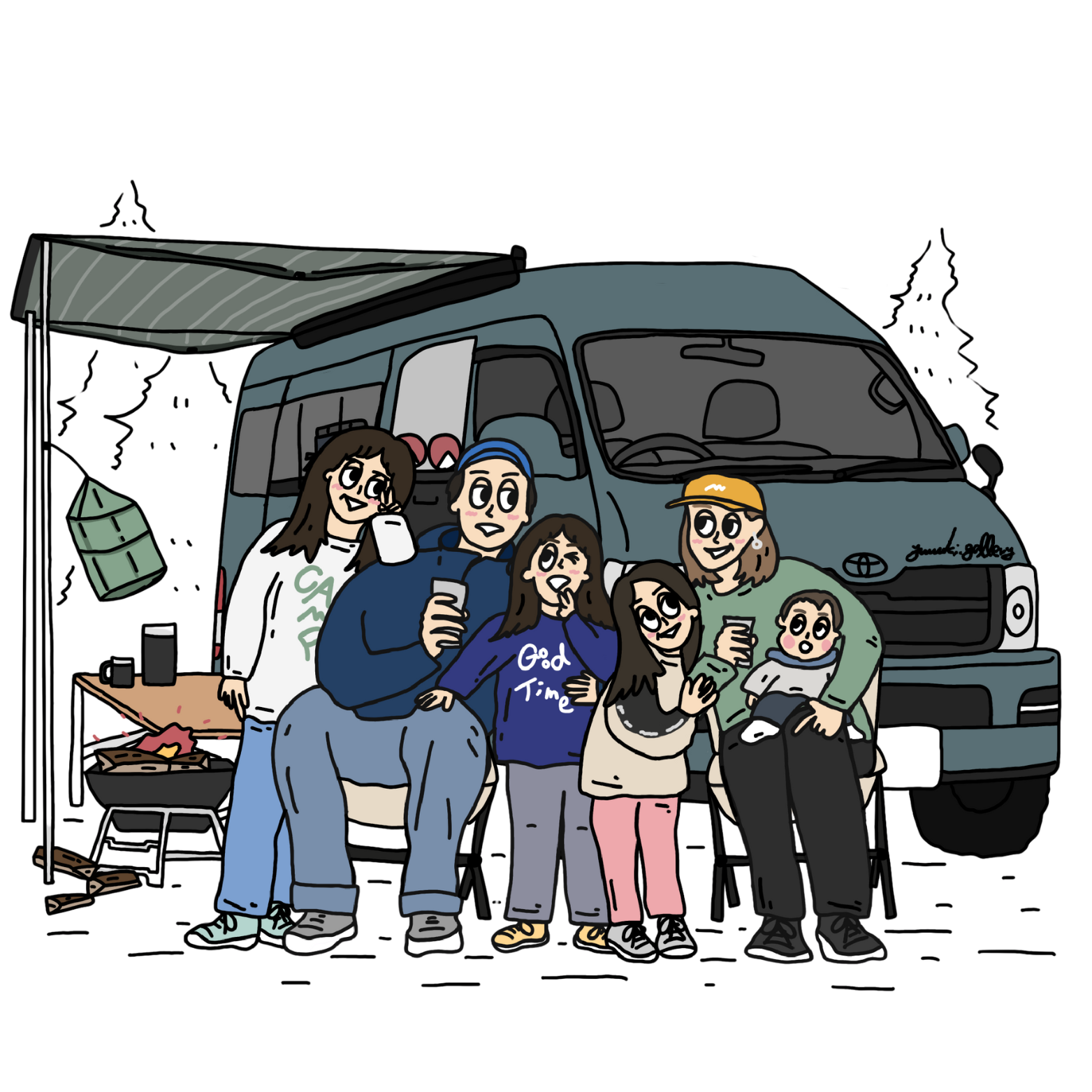
The tide chart said spring tide, but the whirlpools never came.
We left Awaji Island just after breakfast and crossed into Tokushima by late morning. The Uzunomichi walkway kids had been asking about for weeks was the first real stop.
Mister Donut at Awaji SA: Breakfast with a View of Akashi Kaikyo Bridge
We stopped at Awaji Service Area before crossing the bridge. The Mister Donut here opened in February 2026, in a standalone building beneath the Ferris wheel. Open terrace seating faces the Akashi Kaikyo Bridge.
A kite swooped low over our table twice. The kids held their donuts closer after that.
Uzunomichi (Naruto): Walking Above the Whirlpools — What No One Tells You About Timing
The Uzunomichi walkway runs 450 metres inside the Onaruto Bridge deck. It hangs above the strait where the whirlpools form. We knew it was a full moon spring tide—perfect conditions, according to every website we read. What we didn’t account for was low tide timing.
We arrived mid-morning. The water moved, but no whirlpools appeared. A guide near the entrance explained that spring tide alone isn’t enough. You need to arrive within an hour of low tide—or high tide, depending on the moon phase. We were three hours early.
The kids didn’t mind. The glass floor panels became the main event. They stepped on cautiously at first, then lay flat to press their faces against the glass. By the third panel they were posing. The youngest asked if the floor could break. It won’t, but the question is fair when you’re looking straight down at fast-moving water.
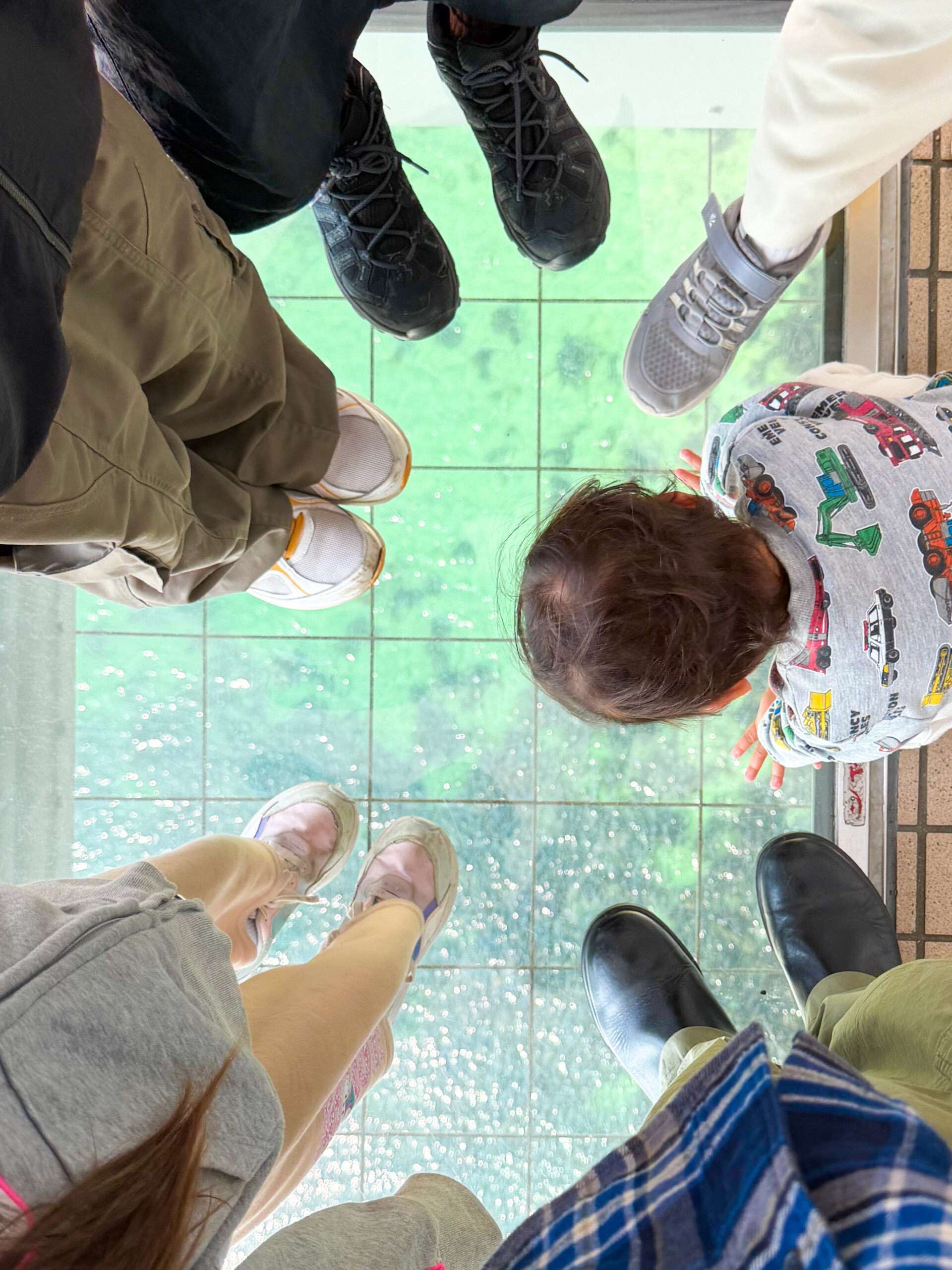
Free binoculars line the walkway. We spotted a few tour boats circling below, waiting for whirlpools that weren’t coming either.
A local told us the best strategy is to arrive early when the timing is right—park, walk the coastal trail, then enter the walkway 30 minutes before peak tide. We’re planning to come back in summer and try again.
Kagawaya Honten: The Sanuki Udon Bowl We Found After Giving Up on the Famous Queue
We had planned to eat at Yamagoe, a well-known udon shop in the hills. The line stretched across the parking lot. We kept driving.
Kagawaya Honten sits along a quiet road near the coast. It’s the shop attached to Sanuki Shokuhin, a noodle factory that’s been operating since before the shop opened in 2002. The udon is hand-cut. The dashi uses whole niboshi and tastes mild and round.
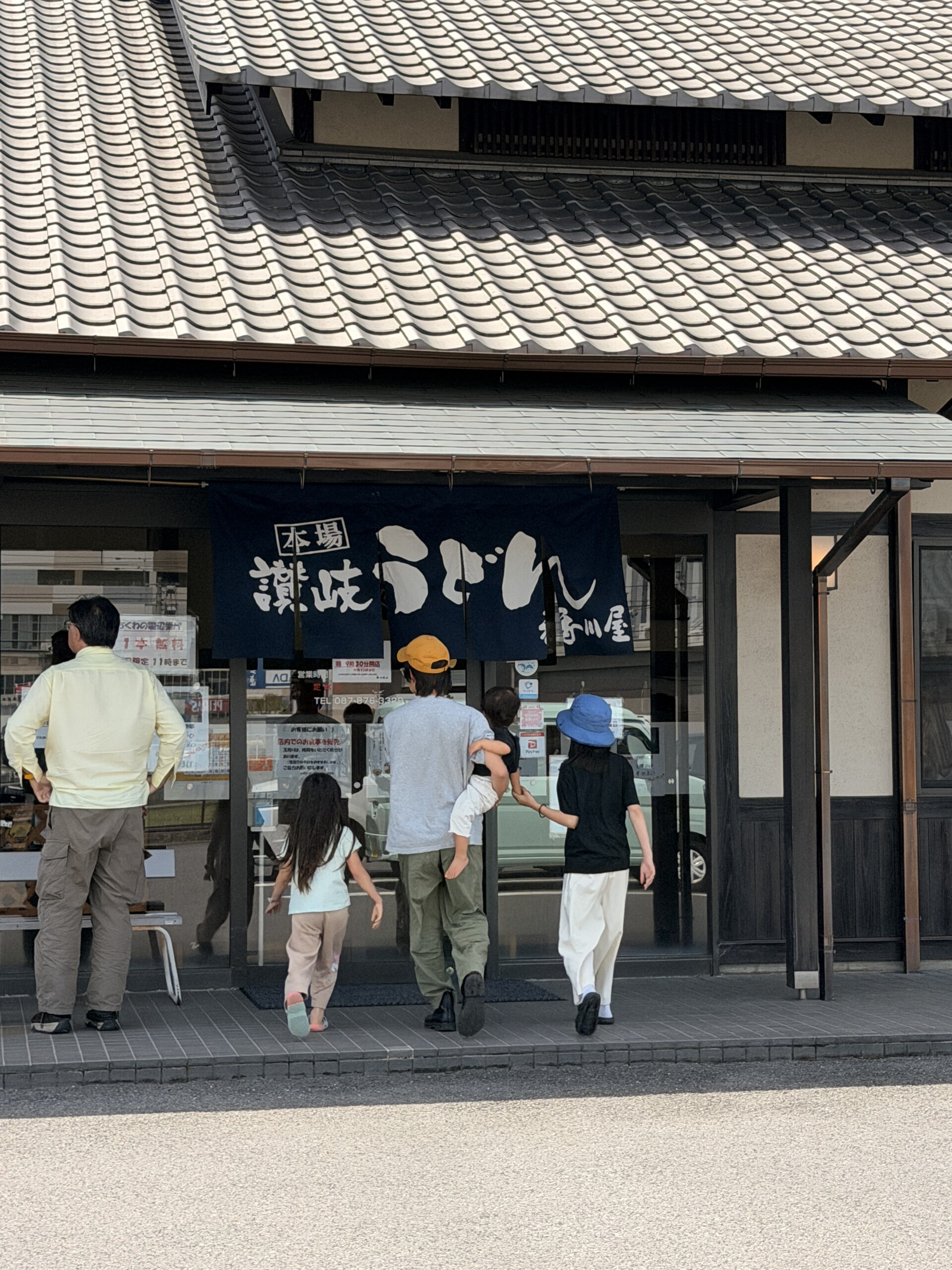
We ordered niku bukkake. One of the kids said it tasted the same as Marugame. That’s not a complaint—it just means the baseline for Sanuki udon is high, even at places without a queue.
KITOKURAS, Marugame: A Timber Yard Turned Cafe Where Our Kids Played Piano for 15 Minutes
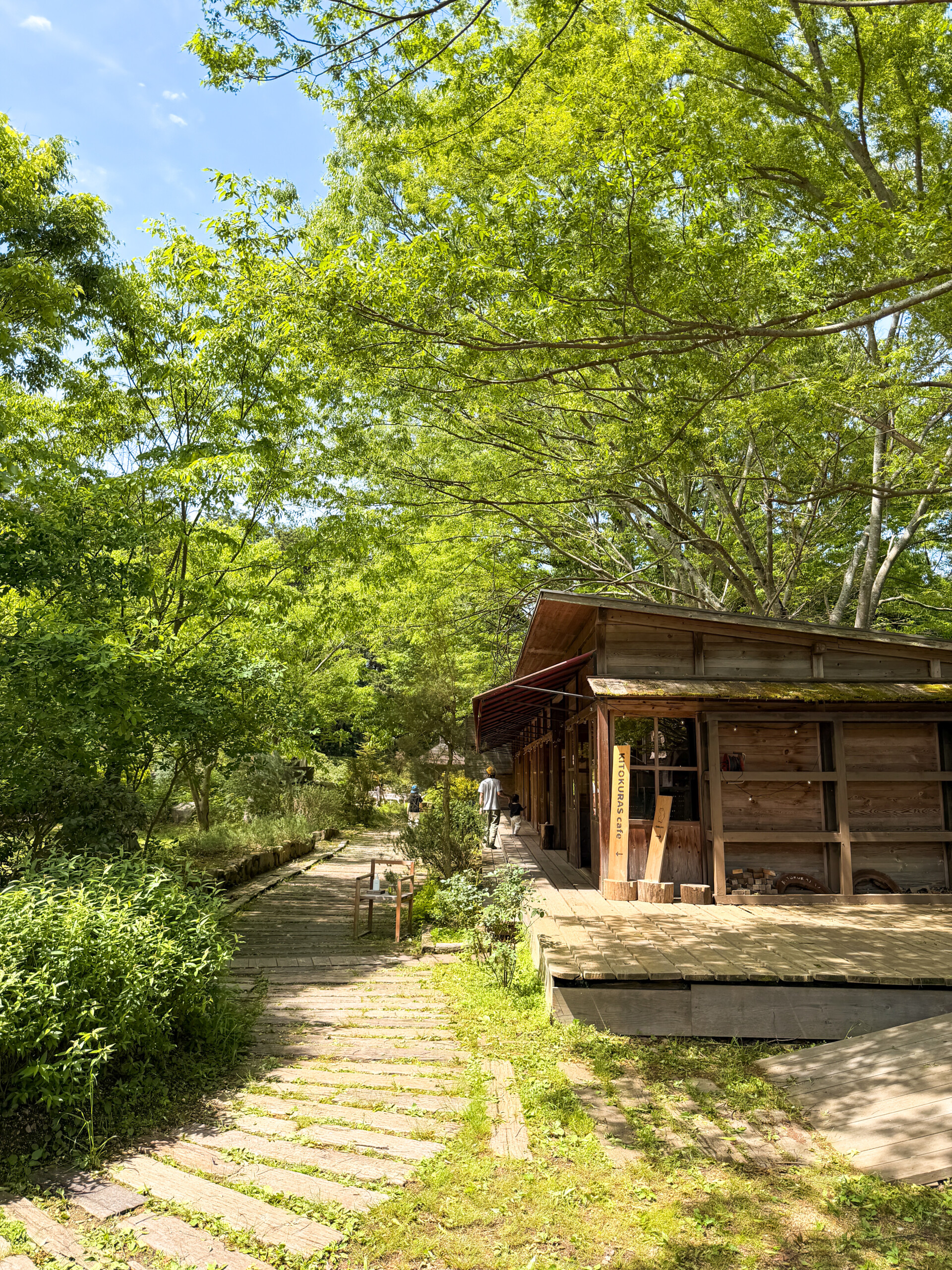
KITOKURAS is a cafe and workshop complex run by Yamaichi Lumber, a timber company founded in 1947. The cafe sits across a narrow road from a forest walking trail, a small playground, and a series of timber-frame pavilions.
We ordered coffee, apple ginger, and orange juice and shared all three between us. The apple ginger was the favourite. You can take your drinks across to the forest side and sit in one of the small rooms overlooking the trees.
Inside the main building, there’s a staircase where each step plays a piano note when you walk on it. All four kids spent close to 15 minutes trying to play songs they knew. The scale didn’t match what they expected, so nothing came out right. That made it funnier. One of them said it felt like being small enough to walk inside a piano.
The shop sells wooden craft items, slabs, and cut timber. They run workshops regularly, though we didn’t stay for one this time.
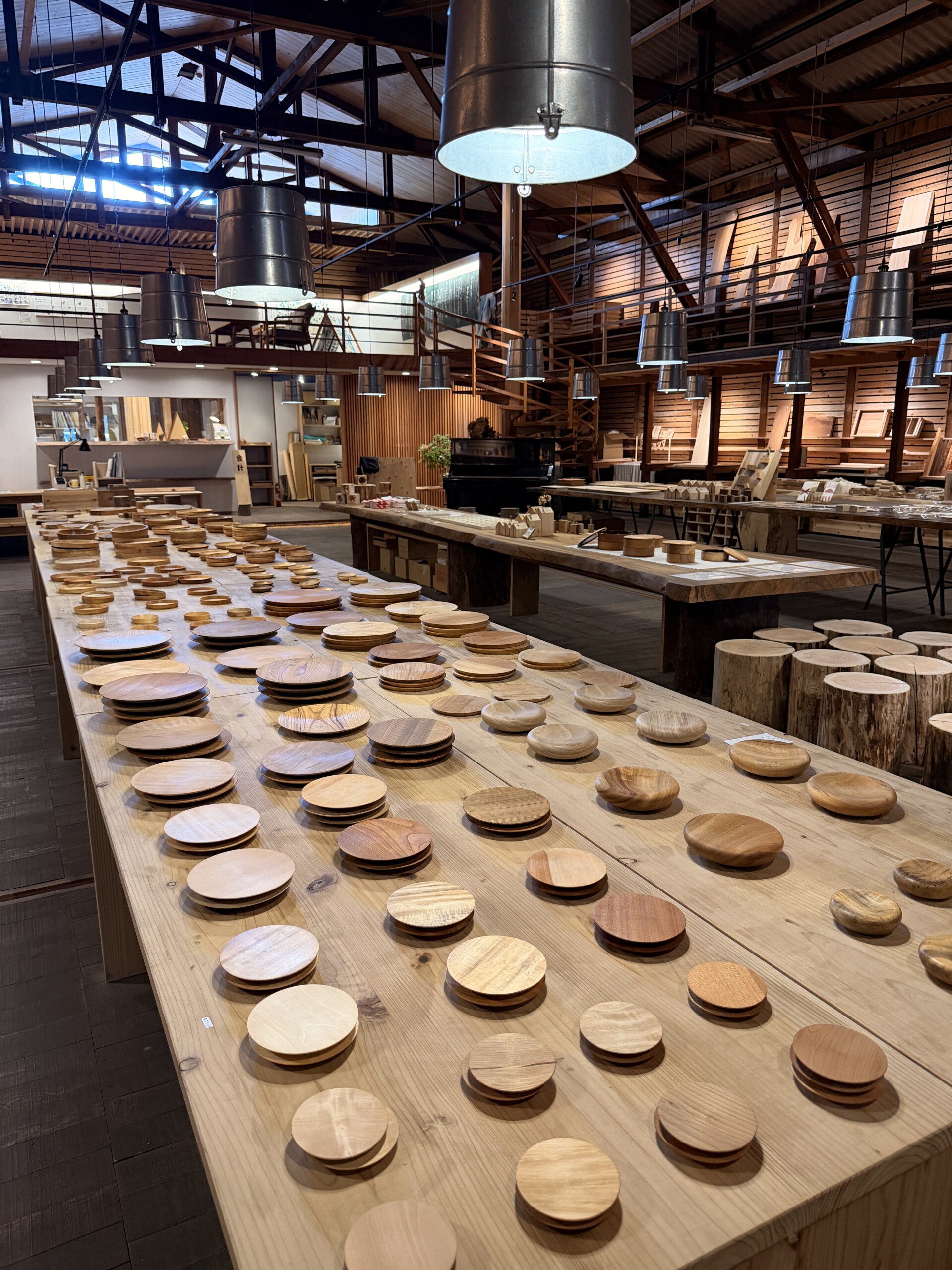
Zenigata Sand Art, Kanonji: Free Overnight Parking and What to Expect at the Viewpoint
We reached Kotohiki Park in Kanonji by late afternoon. The Zenigata sand sculpture sits on the beach below a forested hill. To see it properly, you walk 15 minutes up a steep staircase to the observation deck.
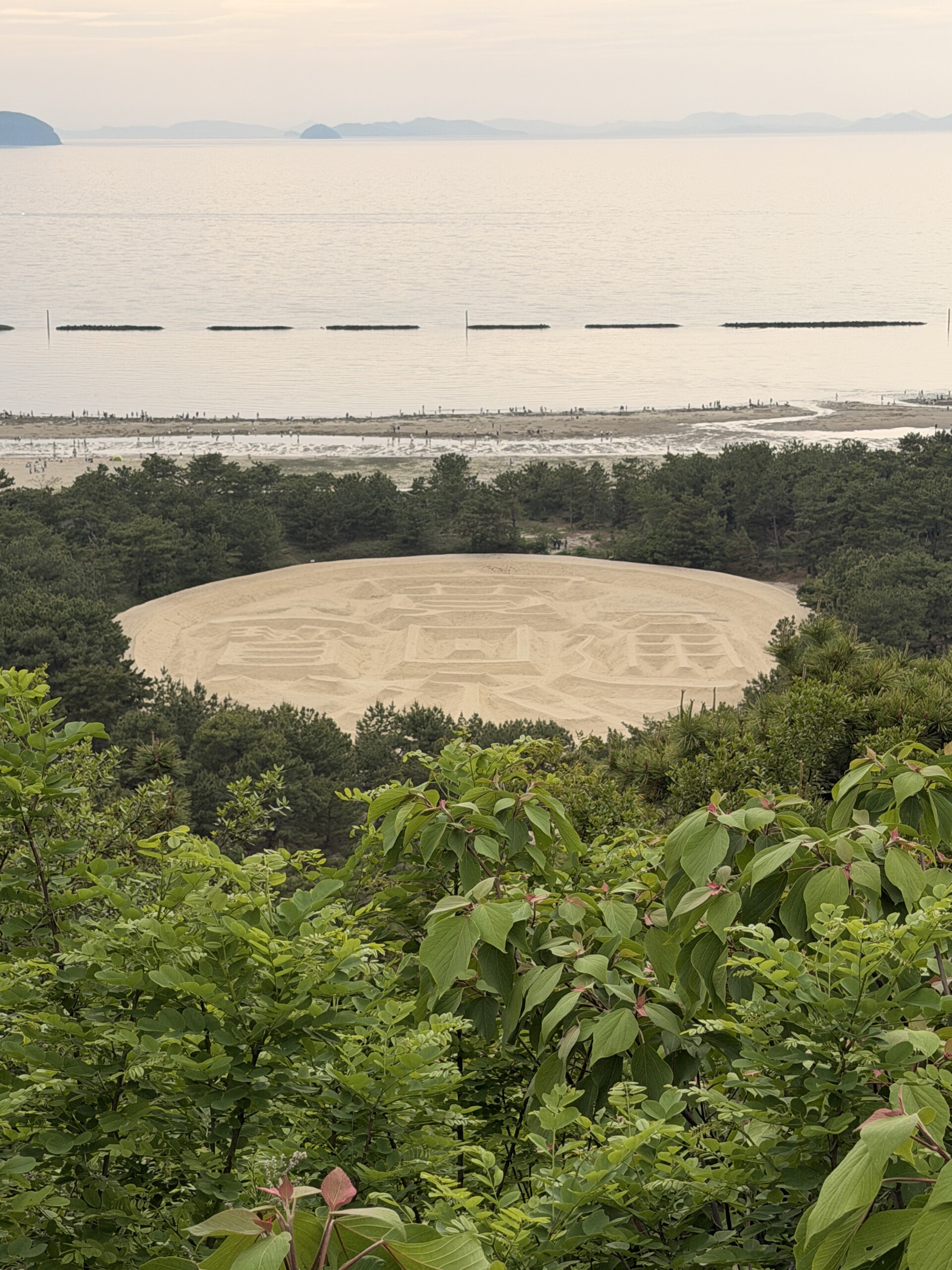
The sculpture is 122 metres wide and 345 metres around. Local legend says it was made in one night in 1633. There’s a belief that seeing it brings health, long life, and freedom from money worries.
The climb is manageable but the steps are uneven. We kept the youngest between us. The beach below was busy with families digging for shellfish.
The parking lot has space for large camping cars. We parked on the ocean side with no issues—no height barriers, wide lanes, flat ground. It’s free and open 24 hours. The sculpture is lit from sunset until 22:00.
Restaurants and the bathhouse are both within walking distance from the lot. We had dinner at Hachibako before heading to the onsen.
Kotohiki Kairo Onsen: Visiting a Sauna-Forward Bathhouse with Six People on a Budget
Kotohiki Kairo is a large bathhouse with four saunas, including two tent saunas. The design skews young. It’s clean and modern, with a tatami rest area and an outdoor terrace that overlooks the ocean. We visited at night, so we didn’t see the view.
The cost for six people was ¥4,400. That’s higher than most rural onsen we visit, but the facilities matched the price. There are two indoor baths and one large outdoor bath. The deck is wooden and doesn’t get slippery, which made it easier with the younger kids.
We slept in the parking lot afterward. It was quiet, well-lit, and flat.
Day 1 Route Recap: Awaji Island → Naruto → Kanonji by Camping Car — Times, Costs, and Parking Notes
We covered roughly 150 kilometres from Awaji SA to Kanonji. The only toll was the bridge crossing. Parking was free at every stop except the Uzunomichi entry lot, which was also free but limited to two hours during busy periods.
Total paid entries for the day: Uzunomichi (¥1,890 for six) and the bathhouse (¥4,400). Meals and fuel aside, the day cost under ¥7,000.
The camping car handled the coastal roads and hill climbs without trouble. Road width was never an issue, even on the approach to KITOKURAS.
We stayed the night at Kotohiki Park. No one else was parked overnight, though the lot allows it. The restrooms stayed open and lit all night.
The whirlpools are still on the list. Maybe timing it right makes all the difference, or maybe the glass floor and the current below are enough on their own.